Where Ideals Meet Reality: Standardization in the Current Moment
Recorded live at TPAC 2026 in Dublin! Eric Meyer and Brian Kardell sit down with Valerie Young, Lola Odelola, and Jeffrey Yasskin to explore where web standards ideals meet reality. From accessibility testing and horizontal review to funding, volunteer labor, developer representation, and the challenge of sustaining the digital commons..
Francois Daoust: We thought that we would invite our Igalia friends to basically run the show for half an hour and take us through a discussion with some well-known guests here. I'll let them introduce basically everything and run the show from now on. There you go.
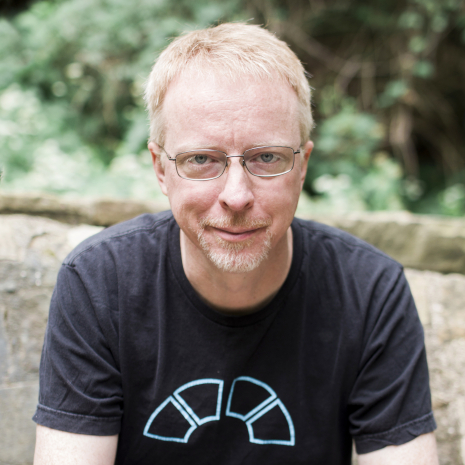
Eric Meyer: Thank you. Hello, everyone. I'm Eric Meyer. I'm a developer advocate at Igalia.
Brian Kardell: I'm Brian Kardell. I'm also a developer advocate at Igalia. As you said, we do this podcast fairly regularly. We talk about all things web and web standards, and we wanted to talk today about our ideals where the rubber meets the road in standardization. So we thought we would have these particular guests because they would be ideal. For people in the room and for people at home, can you introduce yourself?
Eric Meyer: Starting with Valerie.
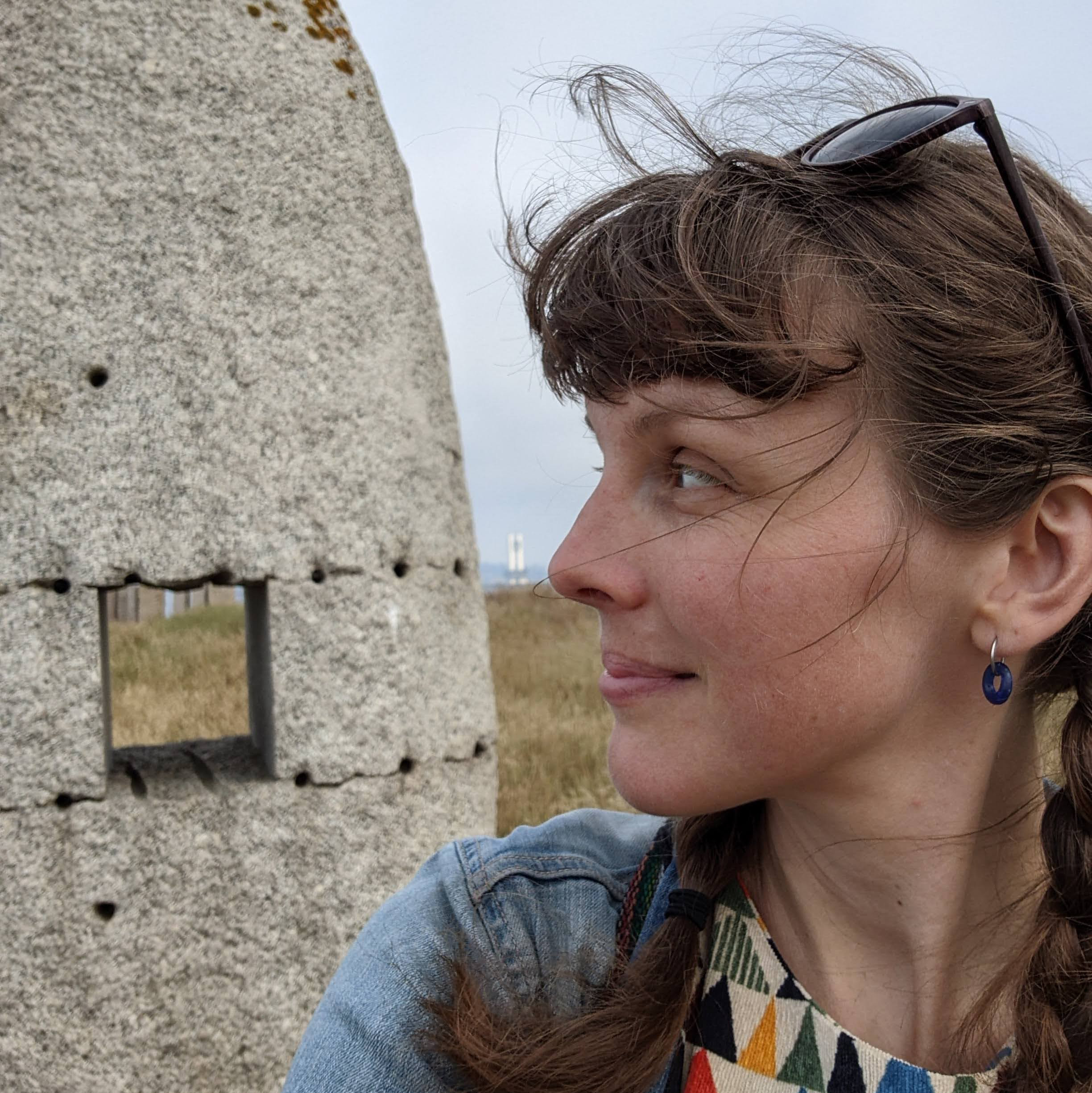
Valerie Young: Thanks. My name is Valerie Young. I work at Igalia also, and I am one of the co-chairs of the ARIA working group of the W3C.
Lola Odelola: My name is Lola Odelola. I am a co-chair of the Technical Architecture Group along with Jeffrey and Hadley. And I am leading a project called Accessibility Compact Data, which Shadi referred to. I just want to take this moment to say I cannot take credit for ARIA-AT. That is Matt King and the amazing work he's been doing.
Jeffery Yasskin: I'm Jeffrey Yasskin. I'm another co-chair of the TAG. I work at Google, trying to connect the right people who are working on standards. I have a history with Web Bluetooth and Web Packaging.
Eric Meyer: Yeah. We wanted to talk today about not just what kind of standards work should be done, but also the context in which that standards work is being done because there are a lot of changes happening right now. We just heard about that in the previous talk. Not everyone is on board with some of those changes, so other people are fully on board with those changes and that will make things very interesting. But also there's a lot more than just AI and what it's doing. Actually, I really want to hear a little bit more about the Accessibility Compact Data because that is a thing that's been missing and it's a thing that's needed, and sort of how that has come about.
Lola Odelola: Sure, absolutely. As I mentioned, Matt King has been working on ARIA-AT for... I think since 2018 now, and he can definitely speak to more about how that project came about. But we do not have anything on the web that says this web feature works with this screen reader. Even in ARIA-AT, a lot of the tests for that are testing the author and practices guide, which are a bunch of web component type patterns. And the tests for that are just measuring to make sure that those patterns are meeting some kind of baseline. But developers typically go to places like MDN and they see something that says, 'This web feature is widely available in baseline,' or they scroll down to the bottom of the page and they see a browser compatibility table and they see that this web feature has full support in these browsers or has partial or no support in these browsers. But what happens when a web developer needs to know that the thing they are doing, that they are using, the web feature they are using is voiced correctly in screen readers? And we do have intention of going beyond screen readers to other assistive technologies. There isn't anything for that and that's how ACD comes about, because what ends up happening is that web developers assume this is a solved problem. They assume browser compact data includes accessibility information. They assume baseline data includes accessibility information, and it doesn't. So ACD is trying to answer the question of, and I think Shadi had it on one of his slides, 'What is accessibility supported? What web features are accessibility supported?' That just means that the user agent supports the web feature natively, and the assistive technology communicates the web feature or conveys the web feature in the language that the user prefers. So we're trying to build that data using ARIA-AT and web platform tests. And a lot of my work this week is figuring out how we do that.
Brian Kardell: There's even more to the accessibility testing and web platform tests and things that is also recent development. I don't know if, Val, you want to talk about some of that?
Valerie Young: Yeah. Something that feeds directly into the work that Lola's doing and really I think makes it possible in some ways is the great strides we've made in automated accessibility testing. For a long time, the accessibility support of web features in the browsers was untestable by the major test suites that people used to test if a web feature was correctly implemented in the browser. Only in those last few years have we seen new tests. We got some testing functionality that was implemented in around 2020, and it was quite limited. But in the last few years, the WPT is the main test suite for testing browsers, standards implementation in browsers. There is a WPT interop initiative of the last few years and there was an accessibility WPT interop initiative of the last few years. So all of the browsers decided to really invest in trying to get accessibility testing into WPT. At Igalia, we got some funding to work on a lot of that testing, which enables... I don't know how much to summarize, but truly in this last year, there's been testing surfaces opened that we've never had before about the browser implementation of accessibility and interoperability with assistive technologies. So that's a change that's really exciting.
Brian Kardell: I don't know how many people know this, but there was no common test suite. Maybe everybody here knows this, but there was no common test suite like web platform tests for a long time. I think 15, 20 years? I don't know. Who knows? The thing is 2012 was the beginning of that. I think Tobie Langel announced that we had 1% of the web platform at that stage covered. But this is the interesting thing about the W3C and our ideals. We claim that we care about accessibility and we care about internationalization, privacy, security, interoperability, all these things. But at the end of the day, some of these things still slip through the cracks. And we get to 2026 and we're like, 'Hey, we can test accessibility. Go us.' So yeah, I mean, why is it that way?
Jeffery Yasskin: You can care as much as you want, but if nobody pays for it, it's not going to happen.
Brian Kardell: Yeah, so-
Eric Meyer: Ouch.
Valerie Young: Right.
Eric Meyer: I mean, true, but ouch.
Valerie Young: Yeah. I guess we saw in the WPT interop investigation... I mean, in particular, I can think of Simon from Mozilla and James Craig from Apple who were able to invest a lot of time in actually seeing these tests... seeing a fall through in the creation of these tests. And then again, on the subject of where the money's coming from, the NLnet organization funded Igalia for the other half of that test suite or the other half of the recent test. There's two kinds of accessibility tests that are important. It's a technical detail, but NLNet funded one of them.
Eric Meyer: NLnet being?
Valerie Young: Can you say who? I don't know. NLNET's a funding organization.
Lola Odelola: They're like an open source funding organization.
Brian Kardell: It's from the Netherlands.
Lola Odelola: Yeah.
Brian Kardell: Yeah.
Valerie Young: Okay. Thank you.
Lola Odelola: They fund open source projects. They have a set of requirements. Just on that though, I'm an invited expert. A large reason for that is because I'm independent and I work for myself. Also, funding is a big, big part of my admin trying to find where it's coming from. So a lot of the accessibility work I'm doing in standards at the moment is actually funded by the Sovereign Tech Fund, which is a similar organization, but German.
Brian Kardell: Can we talk about how this fits in with wide review and... even the groups that we are talking about and that we care about, internationalization, accessibility? How many people are on the groups, and how many of those people are coming from the big orgs with lots of deep pockets and doing lots and lots of work versus volunteers who just really care a lot?
Valerie Young: Right, yeah. On the subject of wide review... Well, the ARIA working group doesn't do wide review, but I guess the ARIA working group does serve as a part of the W3C with really detailed technical knowledge of both how browser accessibility works, browser accessibility implementation, also how assistive technologies work and the user experience of using assistive technology, and also how web authors approach accessibility. So we really have... They actually make webpages and those design patterns in the wild. So it's kind of like this really deep technical knowledge of the whole accessibility stack. Although we don't participate in wide review, I think there has been changes within the W3C informally that have led to more cross... even more conversation between ARIA and other groups, or the CSS coming to ARIA early on in proposals to get accessibility feedback or understand how it could be implemented in accessibility. Also, I have to say that OpenUI has been an incredible invention of... Who invented it? I don't really know the history of OpenUI, but I know it also comes from around 2020 and that they're coming out with these great features and they shifted left. They are the shifted-left winners here. They're really, from the very beginning, want to understand what the accessibility needs are of these core features they're releasing for the web and making sure accessibility works from the very beginning. So that's something that we... And a lot of those conversations happen at TPAC. So TPAC I think is invaluable for making new web features accessible.
Brian Kardell: Greg Whitworth is the main champion of OpenUI from the beginning, but I think also Nicole Sullivan was our early champion and helped get it off the ground. So yeah, it's a good effort. I agree.
Lola Odelola: I just wanted to... on the wide review question and how many are volunteers versus from companies. I can't speak to... unless we're saying wide review and horizontal review to mean the same thing. But if they are different things, I can speak more to the horizontal review process. In my experience, it really depends on the horizontal review group, right? If you look at the members of the privacy working group who do privacy horizontal reviews, you have participants in there from a range of big tech companies because browsers really, really care about privacy and some have it as part of their USP, right? So it benefits them to participate in that. But if you look at the group who does the accessibility reviews, which is APA, that has a lot of volunteer effort. I think something you'll find in both groups is that the resources are still kind of constrained, right? At the end of the day, it's people's time that you have to manage. But in APA, that shows up in a very, very real way because it's not just like, 'Oh, I need to speak to my manager to make sure that I can just spend some work time on this.' It's, 'This is my personal time I'm using for this.' The same is true in ARIA-AT who is developing these screen reader tests. I think everybody, including the chairs, are volunteers at the moment. So I really think it depends on the review group and how much the stuff the group is doing fits into the broader product roadmap.
Brian Kardell: Yeah. I think also sustainability isn't formally a horizontal review thing yet, but I think everybody in that group is volunteer at this point. Even in many cases, I think, organizations that have somebody that is on a group are finding time, not formally, to do the work that they know needs to be done because they can manage to do it. Yeah, I don't know. Jeffrey, do you have any thoughts on how this is difficult or we could improve it or-
Jeffery Yasskin: Yeah. It's definitely difficult to justify sending people to the formal review groups. It's usually kind of someone at a company who cares and can make some case to their management, but it's often a loss for our careers to spend time on this. I don't have answers. It would be good to find ways to encourage companies and anyone with funding to contribute to the comments because we all benefit from getting good reviews, but the individuals who are doing it don't and the direct funders can't capture the value that comes back from it.
Brian Kardell: I mean, to the point of our first talk of tonight, this is the infrastructure of everything, right? This is the digital infrastructure of everything, so we all have some kind of role to play. So whoever can do the funding of this important work, I mean, governments or companies or whoever, it'd be great to get more participation to W3C and those groups.
Eric Meyer: Yeah. I mean, it's distressing on some level to hear that organizations can't be convinced to fund wider review or horizontal review. I mean, why not? It seems like if you're a browser maker and you're going to be implementing a thing, you want it to have gone through wide review so that you don't have to do it twice or three times or more, as has been the case with some technologies where a thing was done and it turned out to be the wrong thing. So either a whole new technology had to be invented or whatever that thing was had to be radically overhauled... Yeah.
Jeffery Yasskin: That's why Chromium requires TAG review before shipping things. Chromium's the only engine that does require that, but we want to make sure that it's at least gotten vetted by some group. That's also why Google can justify sending someone to the TAG because when the TAG doesn't understand the things it's reviewing, we get bad reviews and they waste a lot of time before we ship things.
Eric Meyer: Right.
Lola Odelola: I also wanted to answer this question from a different angle, right? We are obviously not the only standards organization, and other standards organization tackle this review problem differently. I think something that is interesting is how the IETF do things. So part of the issue, and this is more speaking from the TAG perspective than the accessibility perspective, is that things come to TAG sometimes at a point where it may be, 'too late,' quote, unquote, to implement changes. When I say too late, I just mean very costly to implement changes. While it would benefit companies to send people to horizontal review groups, there's also a part of it that's like, 'Is it worth the money if we're providing this feedback at this time?' Ultimately, a browser who wants to implement a thing can just implement a thing anyway, regardless of what the W3C says, regardless of what TAG says, regardless of what any horizontal review group says. I think the way the IETF do things kind of lands itself to producing more stable work. So even if there is a review process at the end at some point, what is being reviewed is in a bit more of a... there's a bit more trust that certain things have been considered. I'm not an IETF expert by any means, and there are other people in the room who have a lot more knowledge and context about this. But something that I learned that they do is that when a bit of work is being proposed and they take it to the relevant people and those people are like, 'Okay, we can see this is probably going to touch this part of the platform. Let's just say privacy or accessibility, for instance. We should send somebody who has the expertise to participate in this group while this work is being developed, so that that person can provide their expertise during the development process.' By the time this thing gets to review, hopefully, the idea is that the things that you are going to identify and the problems that you're going to be identifying are not going to be things that are so costly to go back and change because that's already been addressed.
Valerie Young: Yeah. That reminds me a lot of what's happened with OpenUI, because there are a few people in the ARIA working group who are really experiencing accessibility who attend those meetings. So yeah, it's basically what you're talking about, but they worked very hard.
Brian Kardell: Yeah. I was going to say this is a lot like just the liaison process where we have... Even in your charter, you should identify what groups you're connected to, where there should be connections, where you should get liaisons, who you should work with. But I think that one thing is, again, the funding and the time. Do you actually have a liaison who can do that? In OpenUI, people are very, very dedicated to that. And I do think possibly some of that work is on their own heart dime. You know what I mean? They do it because they believe in it and they think it's important. They just want to see it happen. Yeah.
Jeffery Yasskin: Anything in a community group kind of is outside of the W3C process. There's nothing kind of formal that can force the right people to talk to each other. We kind of moved things toward community groups over the last, I don't know, 10 years. We kind of created the incubation process because too much was getting into working groups that kind of wasn't actually viable. But I think we moved too far that direction and we need to kind of get stuff back into working groups, and I know there's work at the W3C to make that happen.
Brian Kardell: I think we're almost at time. So I have just one more thing that I'd like to talk about, which is... You see, even in the presentation right now that we've had in the past 30 minutes, vast difference of things like this is something that's in the browser, this is maybe something that's in a social web, this is a joint thing with GS1, this is accessibility. We have a lot of interested parties who are interested in a lot of different things and they're all voluntary standards, and you need to get everybody to cooperate and it is incredibly hard. I know that we saw this in web browser implementations where alignment wasn't always happening and we had a lot of interoperability problems. We started this inter-op project where every year, we do a lot of work to choose some subset of that to agree, 'We're all going to focus on this at a minimum,' and we're going to have ways that we focus on conformance and measure it. I wonder if something like that you think could be helpful for W3C at large to say, 'Here are the things that are the priority for 2027, and we're going to make sure that everybody collaborates on these.' Not that we won't do other things, we will do other things, but do you think something like that could be helpful or... I'm just throwing this out there, not to talk to anyone about this, just off the top of my head.
Lola Odelola: Selfishly for me, yes. But that kind of work mode would align so much with the stuff I'm already doing in the W3C and would be very helpful. A lot of the work I do is more developer focused and providing things for developers, right? It'll be an easy way to be like, 'Developers, these are the things we care about this year.' So linking with Francois and Patrick from WebDx and things like that would be helpful. However, unselfishly, I don't actually know. Being on TAG, and you will see that you know this too, we just get such a variety of things that setting any kind of priority organization wide.
Brian Kardell: Hard.
Lola Odelola: Yeah. It seems like really hard and I don't know what the benefit of that work would be, especially for the spec authors and especially for the spec authors whose thing isn't a priority. What does then that mean?
Jeffery Yasskin: I think up until maybe this week, we didn't have the data to make the decisions. Your Mind The Gaps breakout and the research behind it might start telling us what is actually important, what we could align on, but it's really hard to know ahead of time.
Eric Meyer: Okay. Well, yeah, we're just about out of time. So I want to wrap it up with, if you could have one wish that would not backfire to fix-
Brian Kardell: No trickery involved.
Eric Meyer: ... to improve things at the W3C, what would it be? You're allowed to pass because I'm kind of springing this, but-
Valerie Young: One wish? I mean, well, just that these people doing the work are able to do it as part of their job and are funded for it, it's non-volunteer time.
Lola Odelola: My one wish would probably be to have some kind of process of including developers in the wider conversations that we are having about work that's happening in the W3C. There isn't really much developer voice representation and, yeah, I wish we'd be having that.
Jeffery Yasskin: I'm going to say the same thing as Val in different words, that we find a way to fund the commons.
Lola Odelola: I don't mind more money.
Brian Kardell: That would be my answer as well.
Eric Meyer: That's great. Well, thank you very much for your time, and thank you all for being here and listening. I think we'll all be around for further conversation, if you'd like.




 Recorded live at TPAC 2026 in Dublin! Eric Meyer and Brian Kardell sit down with Valerie Young, Lola Odelola, and Jeffrey Yasskin to explore where web standards ideals meet reality. From accessibility testing and horizontal review to funding, volunteer labor, developer representation, and the challenge of sustaining the digital commons..
 Francois Daoust

 Eric Meyer
 Brian Kardell
 Valerie Young
 Lola Odelola
 Jeffery Yasskin